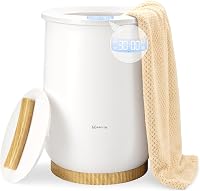
Towel Warmer for Home Use: What to Check Before You Buy
Choose a towel warmer for home use by matching its format and capacity to your routine. Check towel size, available space, timer or shut-off features, and which fabrics the warmer can safely heat.
On this page (9 sections)
- Which towel warmer format suits your home?
- How much capacity should a towel warmer for home use have?
- What timer and shut-off features should you check?
- Will the warmer fit your room and outlet?
- Which fabrics and towel conditions are allowed?
- How do the four home towel warmers differ?
- How should you set up and care for a towel warmer?
- What common towel warmer buying mistakes should you avoid?
- Which towel warmer should you choose for home use?
A towel warmer for home use should match your towels, room and routine. Compare its format and capacity, then check its controls and any limits on fabrics or damp items.
Bucket warmers hold towels inside a tub, while racks warm towels across bars. The right choice depends on where you can place or mount it and how you want to use it.
For a broader overview, start with our guide to towel warmers for the bathroom. The sections below help you narrow down the options and avoid buying a warmer that doesn't suit your space or habits.
Which towel warmer format suits your home?
Choose a bucket if you want an enclosed warmer you can move, or a rack if you want towels to hang on bars. Your available floor and wall space can make the choice straightforward.
A bucket needs room for its base, lid and towels going in and out. A foldable bucket also needs a place to open and enough storage space for its folded frame.
A rack needs a suitable wall and a plan for its outlet or wiring.
| Format | Consider it if | Check before buying |
|---|---|---|
| Bucket | You want an enclosed warmer for towels or other allowed items | Capacity, outside dimensions, lid access and placement |
| Foldable bucket | You want to store the warmer flat between uses | Open footprint, folded storage space and setup |
| Wall-mounted rack | Floor space is limited or you want towels on bars | Mounting location, outlet or wiring options and installation |
A wall-mounted rack gives you a different routine from a bucket: towels hang across bars instead of sitting inside a tub. The Regent wall-mounted towel warmer is an example of a rack with both plug-in and hardwire options.
How much capacity should a towel warmer for home use have?
Choose capacity based on the largest number and size of towels you'll warm at once. A stated capacity is a useful guide, but it doesn't replace checking how your own towels fit.
Keenray and SAMEAT say their bucket warmers can hold up to two oversized 40 x 70 in towels. VIPBATH describes its 35L foldable warmer as holding 3 large towels or 2 robes.
Capacity doesn't tell you whether your towels will fit comfortably when loaded. Compare the warmer's dimensions with the size and thickness of your usual towels, and follow the loading instructions.
Think about how many people use the bathroom and how often towels need to be ready at the same time. A larger capacity may help a household warm several items in one cycle, while one person's daily routine may call for a smaller unit that takes less room.
If you're comparing capacity across models, our guide to what size towel warmer you need explains what to consider before choosing.
What timer and shut-off features should you check?
A timer lets you choose how long a warming cycle runs, while automatic shut-off ends operation after a set period. Check the actual settings and how they're selected, since models differ.
Keenray describes a single-button control and heating for up to 60 minutes, with automatic shut-off. SAMEAT offers 30-minute, 1-hour, 2-hour and 4-hour settings, and starts at 30 minutes by default.
VIPBATH describes overheat shut-off and automatic power-off if the warmer tips over. These protections address different situations, so check the instructions and use the warmer as directed.
A timer is useful when you want the unit to stop after a set interval. If you prefer a simple control, a one-button warmer may be easier to operate.
For more options with timed controls, see our best towel warmers with a timer guide, and read about towel warmer auto shut-off features.
Will the warmer fit your room and outlet?
Measure the place where the warmer will sit or mount, then check how you'll reach the outlet and controls. Room fit includes access, not just the unit's footprint.
Keenray's bucket measures 13 x 13 x 19 in. VIPBATH's foldable model measures 16.38 x 11.42 x 22.71 in and folds flat for storage.
The Regent is designed for wall mounting and comes with a 7 ft power cord. It can also be hardwired to a junction box, so consider your preferred connection before choosing a mounting spot.
Check that the lid or rack won't obstruct a door, cabinet or path through the room. For a bucket, leave room to load towels without lifting or shifting the unit awkwardly.
For a rack, check the wall surface, mounting position and cord route before installation.
The Regent is designed to be wall mounted, though it offers a plug-in option as well as hardwiring. Read does a heated towel rack need to be hardwired? to compare those installation choices.
Which fabrics and towel conditions are allowed?
Check the instructions for fabric and moisture limits before warming clothing or towels. A warmer's capacity doesn't mean every item is suitable.
SAMEAT says its bucket can heat cotton materials, but advises against chemical fiber towels, clothing and materials that aren't heat resistant. It also advises against using the warmer to dry damp towels or other damp items.
Keenray describes use with towels, bathrobes and blankets. Follow the instructions that come with the warmer for every item you plan to heat, especially when the fabric or care label is unclear.
A towel warmer's purpose is to warm an item for comfort, but that doesn't make it a laundry dryer. Hang damp towels to dry.
Then warm them only if the model's instructions allow it. If you want to compare ways to warm a towel, see how to warm a towel fast.
How do the four home towel warmers differ?
Pick the model whose format, capacity and controls fit your routine. These options cover portable buckets, a foldable design and a fixed wall-mounted rack.
Keenray CL1 Bucket Towel Warmer
The Keenray CL1 suits a home that wants a portable bucket with space for oversized towels. It has a 20L capacity, and Keenray says it accommodates up to two 40 x 70 in towels.
The control is a single button, and Keenray describes a heating period of up to 60 minutes with automatic shut-off. The bucket and lid separate for cleaning, and the unit weighs 4 lb.
Choose it if you want an enclosed warmer you can move around the home and its dimensions fit your bathroom. Skip it if you need a rack for hanging towels or don't have room for the bucket and an open lid.
SAMEAT Wood Handle Bucket Towel Warmer
The SAMEAT bucket suits a home that wants several timer choices. It can hold up to two 40 x 70 in towels and offers 30-minute, 1-hour, 2-hour and 4-hour settings.
The timer defaults to 30 minutes when the unit starts. SAMEAT says to use it with cotton materials and advises against chemical fiber or non-heat-resistant items, as well as damp towels.
Choose it if you want an enclosed bucket and expect to use its different timer settings. Skip it if you want to warm fabrics outside those guidelines or need the warmer to dry damp laundry.
SAMEAT also warns against touching the bucket interior when its hot-surface indicator is lit.
VIPBATH 35L Foldable Towel Warmer
The VIPBATH suits a household that wants a higher stated capacity and flat storage. It has a 35L capacity, and VIPBATH says it can warm 3 large towels or 2 robes.
The clear window lets you check towels without lifting the lid. VIPBATH describes a frame that opens in seconds and stores flat, along with overheat shut-off and automatic power-off if tipped over.
Choose it if you want a foldable design and have enough space for its open footprint. Skip it if you prefer a fixed rack or can't store the folded frame.
Check the unit's height against any shelf or cabinet where you plan to keep it.
Regent 25.5-Inch Wall-Mounted Towel Warmer
The Regent suits a home that wants a rack instead of a bucket. Its five bars warm towels and garments, and it's designed for wall mounting only.
The included power cord is 7 ft long, and the rack can also be hardwired to a junction box. Warmrails says the bars reach a comfortable temperature in about 15–20 minutes.
Choose it if you have an appropriate wall location and want towels to hang on bars. Skip it if you need a portable warmer or can't mount a rack where it can reach power.
Check the mounting instructions and decide whether you want the cord or hardwire option before installation.
How should you set up and care for a towel warmer?
Set up the warmer on a suitable surface or wall, keep its controls accessible and follow the model's instructions for loading and care. A clear setup makes it easier to use the warmer safely and consistently.
For a bucket, choose a stable, convenient spot with room to open the lid and place towels inside. For a rack, check its mounting position and connection before installation.
Keep the cord routed safely, and don't block access to the switch or timer.
Load only the items and fabrics allowed by that model. Don't use a warmer to dry damp items if its instructions prohibit it, and heed any hot-surface warning.
If the warmer has a timer, select a cycle that suits your routine instead of assuming every model runs for the same length of time.
Care instructions also differ. Keenray specifies hand washing, and its bucket and lid separate for cleaning.
Follow the instructions for your own model, and let the unit cool as directed before cleaning or storing it.
What common towel warmer buying mistakes should you avoid?
The most common mistakes are buying by capacity alone, overlooking setup space and assuming every warmer accepts every fabric. Check fit, instructions and controls before you decide.
- Choosing by stated capacity without measuring your towels: Compare towel size and thickness with the warmer's usable space, and consider how many you need in one cycle.
- Ignoring the lid or fold-out area: A bucket needs room for loading and lid access; a foldable frame needs space to open and space to store.
- Assuming a bucket and rack solve the same problem: Buckets enclose towels, while racks warm them on bars. Choose the routine you prefer, then confirm the warmer fits your room.
- Treating a towel warmer as a dryer: Check the model's moisture guidance. SAMEAT explicitly advises against using its bucket to dry damp items.
- Overlooking the timer's default: SAMEAT starts at 30 minutes by default. Learn how your chosen model's controls work before the first cycle.
- Forgetting installation details: A wall-mounted rack needs a suitable location and a decision about plug-in or hardwire connection. Check the mounting and power requirements first.
Which towel warmer should you choose for home use?
Choose the warmer that fits your daily routine and room, then follow its fabric and care instructions. For a towel warmer for home use, start with the format you can accommodate, then compare capacity and controls.
Pick the Keenray if you want a portable bucket for oversized towels with a single-button control. Choose the SAMEAT if you want four timer settings and will use it within its fabric and moisture guidance.
Choose the VIPBATH if a foldable frame and 35L capacity suit your household and storage space. Pick the Regent if you want towels on a fixed wall-mounted rack and can plan for its installation and power connection.
For a wider comparison of bucket and rack formats, read heated towel rack vs towel warmer. If you already know a bucket is right for your bathroom, browse our guide to best electric towel warmers.
Frequently asked questions
What should I check before buying a towel warmer for home use?
Match the warmer to your towels, space and routine. Check how many towels it fits, whether it folds or mounts, its timer and shut-off features, and any fabric or moisture limits.
Measure the spot and check outlet access before choosing a model.
Can a towel warmer dry wet towels?
Don't assume a towel warmer can dry a wet towel. SAMEAT advises against using its bucket to dry damp towels or other damp items.
Check the instructions for the model you choose, and hang wet towels to dry.
Is a bucket or wall-mounted towel warmer better for a home?
A bucket can suit you if you want a portable unit that holds towels inside. A wall-mounted rack can save floor space and keep towels on bars.
Compare your room layout, installation options and how you prefer to warm towels.
Do towel warmers have automatic shut-off?
Some do, but the timing and controls vary. Keenray describes heating for up to 60 minutes with automatic shut-off, while SAMEAT offers 30-minute, 1-hour, 2-hour and 4-hour settings.
Check the controls and instructions for your chosen model.