Towel Warmers for the Bathroom: Types and How to Choose
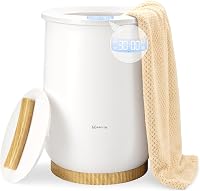
Towel warmers for the bathroom come in two main styles: countertop buckets and wall-mounted racks. Choose a bucket for enclosed warming and flexible placement, or a rack to hang towels on the wall and save floor space.
On this page (10 sections)
- What kinds of towel warmers fit a bathroom?
- Are towel warmers for bathroom use better as buckets or racks?
- How should you compare towel warmer capacity?
- What bathroom location works for a towel warmer?
- What controls should you look for in a bathroom towel warmer?
- How do you set up a towel warmer safely?
- Can a towel warmer dry wet towels?
- How should you care for a towel warmer?
- What common towel warmer buying mistakes should you avoid?
- Which towel warmer should you choose for your bathroom?
Towel warmers for bathroom use come in two main styles: countertop buckets and wall-mounted racks. A bucket warms towels inside an enclosed container, while a rack warms towels draped across bars.
Choose based on the towels you want to warm, the space you can give the unit and how you want to power it. A bucket can be moved, while a wall rack needs a suitable mounting spot and may offer plug-in or hardwired installation.
What kinds of towel warmers fit a bathroom?
A countertop bucket suits you if you want to put towels inside an enclosed warmer. A wall-mounted rack suits you if you want towels hanging from bars and prefer to keep floor space clear.
| Style | How towels sit | Space to plan for | A useful fit |
|---|---|---|---|
| Countertop bucket | Inside the bucket | A stable surface and room to open the lid | Enclosed warming and flexible placement |
| Wall-mounted rack | Draped across bars | Wall area and access to the chosen power connection | A fixed place for towels with less floor use |
Buckets need a place where you can load and unload them. Racks use wall space instead, so check that you can mount one where towels are easy to reach and power is accessible.
The form also affects how you use the warmer. A bucket holds towels together inside its chamber, while a rack leaves them hanging in the open; neither arrangement is automatically right for every bathroom.
Capacity, controls, wiring and care instructions vary by model. Compare those details after deciding which basic shape fits your room and routine.
Are towel warmers for bathroom use better as buckets or racks?
A bucket is a practical choice when you want towels warmed inside a container and have room for the unit to sit. A rack is a better fit when you want towels hanging on the wall and can install it in a useful spot.
The Keenray CL1 Bucket Towel Warmer is described for up to two oversized 40 x 70 in towels, robes, blankets and pajamas. It has a 20 L capacity and heats for up to 60 minutes before automatic shutoff.
This bucket suits households that want to warm more than one large towel or occasionally warm a robe or blanket. Skip it if you don't have a stable place for its 13 x 13 in footprint, or if you prefer towels to stay hanging after a shower.
The SAMEAT Wood Handle Bucket Towel Warmer holds up to two oversized 40 x 70 in towels and has timer settings of 30 minutes, 1 hour, 2 hours or 4 hours. It is intended for warming dry towels, not drying damp ones.
Its range of timer choices suits you if you want to choose a longer warming period. Skip it if you need a warmer to dry wet towels, or if you plan to warm chemical-fiber or other non-heat-resistant items.
For a wall-mounted option, the Regent 25.5-Inch Wall-Mounted Towel Warmer has five bars and offers plug-in or hardwired installation. Its included 7 ft power cord provides a plug-in option.
The Regent suits you if a simple on/off switch is enough and you want a five-bar rack. Skip it if a built-in timer is a must, since this model has no timer.
The Colliford 8-Bar Plug-In Towel Warmer is a wall rack with a timer, temperature control and a 60 in power cord. It can be plugged in or hardwired.
Choose Colliford if you want more bars and timed operation in a fixed wall location. Skip it if you want a portable bucket or prefer a rack with a shorter setup process that doesn't involve mounting.
How should you compare towel warmer capacity?
Choose capacity by the towels you want to warm at once. A warmer sized for one bath towel may not suit a household that wants to warm two large towels, robes or other items together.
Keenray and SAMEAT describe their buckets as able to hold up to two 40 x 70 in towels. That gives you a clear reference when comparing your towels, but the way you fold and load them will affect how they fit.
Racks have bars instead of an enclosed chamber. Check the frame and bar layout against the towels you use, and consider whether multiple towels can hang without covering one another heavily.
Think about your usual routine, not only the largest load you might use once. If you warm one towel after each shower, a large family-capacity bucket may take up more room than you need; if several people use the bathroom close together, the extra capacity may be useful.
For a more detailed sizing process, see what size towel warmer you need. Measure the warmer's footprint or wall area, then check that you can open a bucket lid or reach the rack without moving other items.
What bathroom location works for a towel warmer?
Measure the bathroom space and power access before you buy. A bucket needs a stable place to sit, while a wall rack needs a suitable mounting area and access to its outlet or wiring.
For a bucket, check where the lid will open and whether you can reach it without moving toiletries or other bathroom items. A movable warmer can help if you want to store it when it is not in use, but you still need a safe, steady place for it during operation.
For a wall rack, measure the available wall area and check how towels will hang in relation to nearby doors, fixtures and walkways. Leave enough room to place and remove towels easily, and plan where the cord will go if you use a plug-in setup.
The Regent and Colliford both offer plug-in and hardwired options. Read whether a heated towel rack needs hardwiring to compare the setup choices and think through the outlet you have available.
A bucket is often easier to place if you don't want a permanent fixture, but it still needs access to power and shouldn't block your route through the room. A rack keeps the unit off a counter or floor, but its location is less flexible once mounted.
What controls should you look for in a bathroom towel warmer?
Choose controls that match how long you want towels to warm and how much adjustment you want. A timer can stop operation after a set period, while a basic switch gives you direct on and off control.
The Keenray CL1 heats for up to 60 minutes and has automatic shutoff. The SAMEAT bucket offers timer settings from 30 minutes to 4 hours and also shuts off automatically.
The Regent uses an illuminated on/off switch and has no built-in timer. Colliford has a built-in timer that can be set from 1 to 9 hours or to always on.
A short, fixed warming period may suit a simple post-shower routine. Longer timer options can be useful when your household wants more flexibility, but you should still follow the model's instructions and avoid assuming that every warmer is meant to run unattended for long periods.
If you want a warmer that switches itself off, compare the timer range and the way it starts. The SAMEAT defaults to 30 minutes after startup, and its timer indicator stays unlit during that default period; know this before relying on the indicator to show the setting.
For more on controls and automatic shutoff, see towel warmer auto shut-off features. Use the instructions for your exact model to decide how long to run it.
How do you set up a towel warmer safely?
Set up a towel warmer on a stable, suitable surface or mount it according to its instructions, then confirm that its power connection and towel placement work for your bathroom. Don't choose a location until you've considered clearance, access and the way you plan to use it.
For a bucket, place it where the lid can open and the cord can reach without crossing a walking path. Load towels according to the model's capacity and material guidance, and don't put damp items into the SAMEAT bucket.
For a rack, confirm the wall location and installation method before you begin. The Regent includes mounting hardware and can be plugged in or hardwired; Colliford also offers those connection options and includes a 60 in cord.
The two rack models have different layouts, so look at the usable wall area and how your towels will sit on the bars. If you're choosing between a rack and a bucket, compare heated towel racks with towel warmers to match the format to your bathroom and routine.
Follow the instructions supplied with the warmer for assembly, mounting, electrical connection and operation. If you choose hardwiring, use a qualified professional when required by your home's electrical setup or local rules.
Can a towel warmer dry wet towels?
Don't assume a towel warmer can dry a towel that is still damp. SAMEAT specifically says not to use its bucket warmer to dry wet towels or other damp items.
Hang damp towels to dry separately, then use a warmer to warm dry towels when the instructions allow it. This distinction matters because warming and drying are different jobs, and not every warmer is designed for moisture removal.
Follow material guidance, too. SAMEAT says cotton materials can be warmed, while chemical-fiber towels or clothing and materials that are not heat-resistant should be avoided.
The SAMEAT bucket also warns that its interior is unsafe to touch when the hot-surface indicator is on. Keep hands away from the interior during that warning and let the warmer follow its instructions for use and care.
For more guidance, read whether you can put wet towels in a towel warmer. Check the manual for any other towel warmer before treating it as a dryer or putting unfamiliar materials inside.
How should you care for a towel warmer?
Use the care method given for your model and let the unit cool as directed before cleaning or moving it. The Keenray CL1's care instructions say to hand wash only, and its bucket and lid separate for cleaning.
Don't treat all towel warmers as if they have the same parts or cleaning needs. A bucket's removable lid and interior call for different handling from a fixed metal rack, and the product instructions should guide your routine.
Keep the space around the warmer clear enough to load towels or use the rack safely. Before each use, check that a bucket sits steadily or that towels hang as intended on the bars.
Store a movable bucket only when it is cool and clean, and make sure it can be put away without pulling or bending its cord. For a wall rack, check that the cord remains routed safely and that the mounting stays secure as you use it.
What common towel warmer buying mistakes should you avoid?
The most common mistake is choosing by appearance or capacity alone. A warmer has to fit your room, your towels and the way you want to operate it.
- Ignoring the footprint: A bucket needs a stable surface and room to open its lid. Measure the spot before choosing one.
- Guessing at towel fit: Capacity claims are a useful starting point, but the size and fold of your towels matter. Compare your largest towel with the capacity details.
- Forgetting the power connection: A wall rack may need an outlet nearby or hardwiring. Decide which option fits your bathroom before you buy.
- Expecting a timer on every model: The Regent has a simple switch and no built-in timer. Choose it only if manual operation suits you.
- Using a warmer as a dryer: SAMEAT says not to put damp items in its bucket. Hang wet towels separately.
- Ignoring material guidance: The SAMEAT instructions allow cotton and warn against chemical-fiber or non-heat-resistant items. Check the directions before warming other fabrics.
- Assuming every warmer handles long runs the same way: Compare the timer and shutoff behavior, then follow the instructions for your exact model.
- Buying more capacity than you can place: A large bucket can hold multiple oversized towels, but that capacity is only useful if you have room to operate it.
A quick pre-buy check can prevent most mismatches: measure the space, confirm the power plan, count the towels you want to warm and choose the controls you will actually use. Then review the care and material instructions before putting the warmer into service.
Which towel warmer should you choose for your bathroom?
Choose a bucket if you want an enclosed warmer that can hold towels inside and you have room for it to sit. Choose a wall rack if you prefer hanging towels and can accommodate wall mounting and the power setup.
For a bucket with a 60-minute heating period and capacity for up to two oversized towels, consider the Keenray CL1. The SAMEAT bucket suits shoppers who want several timer choices, and it is not meant for drying damp items.
For a wall-mounted rack with five bars and a 7 ft cord, consider the Regent if a simple switch suits your routine. Choose the Colliford if you want eight bars, a timer and temperature control with plug-in and hardwired options.
Start with your bathroom measurements, towel capacity and preferred installation. Then compare the controls and instructions; how towel warmers work explains what to expect from the warming process.
Frequently asked questions
What type of towel warmer is best for a bathroom?
The best type depends on your space and how you want to warm towels. A countertop bucket holds towels inside an enclosed container and can be moved around the home.
A wall-mounted rack keeps towels on bars and saves floor space.
Compare capacity, installation and controls before choosing.
Can a towel warmer dry a wet towel?
Don't assume a towel warmer can dry a towel that is still damp. SAMEAT says not to use its bucket warmer to dry wet items.
Check the instructions for your model and hang damp towels to dry separately.
Do towel warmers need to be hardwired?
Some wall-mounted towel warmers let you choose between hardwiring and plugging into an outlet. The Regent and Colliford models have both options, while other models may differ.
Check the wiring method, outlet location and installation instructions before buying.
How do I choose the right towel warmer size?
Start with the number and size of towels you want to warm at once, then compare that capacity with your bathroom space. Buckets need a place to sit, while racks need a suitable wall area.
Measure the spot and compare it with the warmer's dimensions before you choose.
Can I leave a towel warmer on overnight?
Whether you can leave a towel warmer on overnight depends on its instructions and controls. Some models have a timer or automatic shutoff, while others use a simple switch.
Read the instructions for the exact warmer, and don't assume that every model is designed for continuous use.