Heated Towel Rack vs Towel Warmer: Which One to Buy? (November 2026)
Choose a heated towel rack for wall-mounted bars or a towel warmer bucket for enclosed warming. The best fit depends on your space, towel load, setup plans and preferred controls.
On this page (8 sections)
- Heated towel rack vs towel warmer: what is the main difference?
- Which style fits your bathroom space?
- How many towels can each warmer hold?
- Which warmer gives you more control?
- What should you know about heating and towel placement?
- Who should choose a rack, and who should skip it?
- What setup and care mistakes should you avoid?
- Which one should you buy?
For heated towel rack vs towel warmer, choose a rack for wall-mounted bars or a bucket for enclosed warming. Your decision comes down to where you have room, how you want to load towels and which controls suit your routine.
A rack keeps towels hanging on bars, much like a dedicated heated rail. A bucket warmer holds towels inside an enclosed container, so you load it from the top instead of draping fabric across a wall unit.
The choice affects more than appearance. Wall mounting keeps a floor spot open but needs a suitable wall and a plan for power, while a bucket can sit on a stable surface but takes up room there.
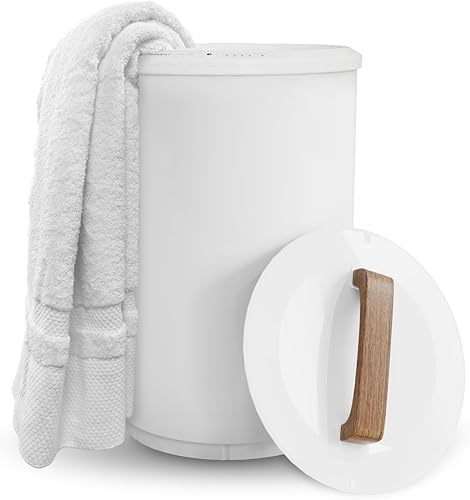
The Regent and Colliford are wall-mounted racks with different bar counts and controls. The SAMEAT is a bucket warmer sized for up to two oversized towels.
 Best for a fixed wall setup
Regent 25.5-Inch Wall-Mounted Towel Warmer
Heated towel rack vs towel warmer: what is the main difference?
A heated towel rack warms fabric spread over bars, while a bucket warmer holds towels inside an enclosed space. Decide first whether you prefer to hang towels in place or load them into a container.
A rack keeps towels visible and lifted off the floor. The Regent has 5 bars, and the Colliford has 8, giving you separate positions for the items you choose to hang.
The SAMEAT uses a bucket design. You place suitable towels inside, and its timer can switch the unit off after a selected warming period.
These styles suit different routines. If you already hang towels on the bathroom wall and want them warm there, a rack fits naturally into that habit.
If you would rather load a towel into a warmer and take it out when needed, a bucket may feel more straightforward.
For an overview of different shapes and setups, see our guide to towel warmers for the bathroom. It covers the main formats and what to consider when fitting one into a room.
Which style fits your bathroom space?
Choose a wall-mounted rack when you have a suitable wall and want to preserve floor space; choose a bucket when you have a stable place to set it. Measure the planned location, including room for the towel and access to the controls.
The Regent measures 18.63 in wide, 5.25 in deep and 25.25 in high in its feature details. The Colliford measures 19.7 x 3 x 31.5 in, so allow enough wall height and clearance for hanging towels.
A wall unit also needs a workable power connection. The Regent can plug into a standard outlet with its included 7 ft cord or connect to a junction box.
The Colliford offers plug-in or hardwired installation and has a 60 in power cord.
If you rent or don't want to alter a wall, check what your home allows before planning a permanent installation. A plug-in option still needs an outlet in a useful location, and the cord must reach without getting in the way.
Our guide to whether a heated towel rack needs hardwiring explains the connection choices. If you are planning a permanent location, our guide to how high to hang a heated towel rack can help you think through placement before mounting.
A bucket is easier to place without wall mounting, but it still needs a stable, convenient spot. The SAMEAT weighs 9.18 lb, and its package measures 19.75 x 12.5 x 12.5 in.
Keep the warmer somewhere you can load it safely and reach its controls. Check that it won't block a walkway, door, drawer or the space you need for towels before and after use.
Which heated towel rack or towel warmer works in a small bathroom?
A wall-mounted rack can suit a small bathroom if you have usable wall space; a bucket can work if a counter or clear floor area is available. Think about the warmer's full footprint and how you move around the room.
Don't judge the fit from the warmer alone. Consider where towels will be stored before and after use, whether a door swings through the area, and whether a rack's hanging towels will narrow the path.
A rack is a poor fit if the wall location would make the cord awkward, leave towels in the way or require mounting where you can't safely install it. A bucket is a poor fit if every stable surface is already occupied or you need that floor space for daily use.
The best wall-mounted heated towel racks page can help if you want to compare rack styles. For enclosed warmers, our best electric towel warmers guide covers bucket options.
How many towels can each warmer hold?
The SAMEAT has a stated capacity of up to two oversized towels; the racks offer hanging bars without a stated towel-count limit here. Match the warmer to your towel sizes and the way you plan to drape or fold each item.
The SAMEAT fits up to two towels measuring 40 x 70 in. Its design can also accommodate bathrobes, blankets and pajamas, but its directions limit safe warming to cotton materials and rule out using it to dry damp items.
The Regent's 5 bars provide places for bath towels, hand towels, swimsuits, washcloths and delicates. The Colliford has 8 bars, but the number of full-size towels that fit depends on their size and how much bar space each one needs.
More bars don't guarantee a particular towel count. A thick towel can crowd nearby bars, and a towel spread across several bars leaves less room for another item.
If you mainly want to warm one or two oversized cotton towels together, the bucket has the clearer capacity match. If you prefer hanging towels and smaller items separately, a rack is a more natural choice.
Which warmer gives you more control?
Choose the SAMEAT for short set times, the Colliford for a longer timer range or the Regent for a basic on/off switch. Consider when you'll use the warmer and whether you want it to stop automatically.
The SAMEAT offers 30-minute, 1-hour, 2-hour and 4-hour settings. It starts with a 30-minute default and shuts off automatically after the chosen period.
The Colliford has a visual timer and temperature control. Its timer can be set from 1 to 9 hours or to always on, which suits someone who wants more choice over how long the rack runs.
The Regent has an illuminated on/off switch and no built-in timer. Warmrails says it can run continuously and can be paired with a standard outlet timer if you want a schedule.
A built-in timer is useful if you want the warmer to stop without remembering to switch it off. If you prefer a simple switch or already use an outlet timer, the Regent has fewer controls to manage.
The Colliford's always-on option is not a substitute for checking the manual and following its directions. Pick a timer setting that fits your intended use instead of assuming that every model should run for the same length of time.
What should you know about heating and towel placement?
The bucket warms towels inside its container, while a rack warms fabric draped across bars. Follow the placement and safety directions for your chosen style, and don't treat a towel warmer as a general-purpose dryer.
Warmrails says the Regent reaches towel-drying warmth in about 15 to 20 minutes. Colliford says its rack heats up in 5 minutes and reaches 122 to 131°F within 20 minutes.
Those are the brands' stated heating details. Your towel and room conditions can affect the result, so use the warmer as directed and allow enough time for your routine.
SAMEAT describes the bucket as warming towels throughout, but its instructions warn that the interior is unsafe to touch when the hot surface indicator is on. Keep your hands clear of the interior while that warning light is active.
On a rack, spread a towel across the bars as the instructions allow instead of bunching it into one spot. On a bucket, arrange the towel so you can load it without touching hot surfaces and can close or operate the unit as intended.
Our guide to how long a towel warmer takes to heat up explains why warm-up time varies by style and use.
Can you put damp towels in a towel warmer?
Don't use the SAMEAT bucket to dry wet towels or other damp items. Let a damp towel dry first, then warm it only if it is a suitable material.
SAMEAT's instructions say the bucket is for warming cotton materials and warn against chemical-fiber towels or clothing, items that aren't heat-resistant and anything still damp. Follow those limits instead of treating the bucket as a way to dry laundry.
For a rack, check the unit's instructions for the items and use it allows. A rack that warms towels or garments is still not automatically a clothes dryer.
Who should choose a rack, and who should skip it?
Choose a rack if you want towels to stay on wall bars and have a suitable installation spot. Skip it if you can't mount it safely, don't have a useful wall or want to load towels inside an enclosed warmer.
The Regent is a straightforward option if you want 5 bars, a simple switch and a choice between plugging in and hardwiring. Its wall-mounted format makes it a poor match if you need a freestanding unit or expect to move the warmer from room to room.
The Colliford is a better fit if you want 8 bars along with timer and temperature controls. Skip it if you don't need that range of control or would rather avoid a wall-mounted installation.
A rack can also suit households that want towels and smaller items to remain on separate bars rather than stored inside a container. Consider the bar spacing and the size of the items you plan to hang, since a larger towel can take up more than one position.
Choose a bucket if you want enclosed warming and a stated capacity for oversized towels. Skip it if you have no stable place to set it, want towels to hang in the bathroom or need a warmer to dry damp laundry.
The SAMEAT is the clearest match when you want to warm up to two 40 x 70 in towels and use a timed shutoff. Its timer offers several short options, and its design doesn't require you to spread the towel across wall bars.
The bucket takes up floor or surface space that a wall rack doesn't. Its material and damp-item limits also matter, so it isn't the right pick if you want to warm any fabric you happen to have nearby.
What setup and care mistakes should you avoid?
Measure, plan the power connection and read the instructions before using either style. A little planning helps you avoid choosing a warmer that doesn't suit the room or using it for an unsupported purpose.
First, measure the exact place where the warmer will go. For a rack, account for mounting height, the full frame, towel overhang and the path to the outlet or junction box.
For a bucket, measure the base area and leave room to open and load it. Choose a stable spot where the warmer won't be bumped or crowded by other items.
Next, decide whether you need plug-in or hardwired installation. The Regent and Colliford have both options, but wall mounting is required for each; use the connection method and installation directions intended for the unit.
Avoid assuming every warmer has the same timer or use limits. The Regent has no built-in timer, the Colliford can be set to always on, and SAMEAT warns against damp items and certain materials.
Don't touch the SAMEAT bucket's interior when its hot surface indicator is on. Also avoid using it to dry a wet towel, which is a different job from warming a dry, suitable cotton towel.
Before each use, place towels as the instructions show and keep controls accessible. After use, switch off a model that requires manual shutoff, and let the unit cool as directed before cleaning or moving it.
Which one should you buy?
Pick a wall-mounted rack if you want heated bars and have a suitable wall; pick the SAMEAT bucket if you want enclosed warming, a stated capacity and timed shutoff. Start with your room and towel routine, then choose the controls and setup that match.
Choose the SAMEAT for up to two oversized towels and a warmer that sits on a stable surface. Its timer shuts the unit off after the selected period, but its instructions rule out wet items and certain materials.
Choose the Regent for a simpler wall rack with 5 bars, an illuminated switch and plug-in or hardwired options. It suits you if a basic on/off control is enough and you can plan a fixed wall installation.
Choose the Colliford if you want a wall rack with 8 bars, temperature control and a timer that reaches 9 hours or can stay on. Check its dimensions and installation instructions before settling on a location.
For the clearest heated towel rack vs towel warmer decision, pick the rack when wall space and hanging access matter most. Pick the bucket when you want enclosed warming and have room to set it down; compare electric towel warmers by style if you want to review more options.
Frequently asked questions
Is a heated towel rack the same as a towel warmer?
A heated towel rack is one kind of towel warmer, but the terms can also refer to different styles. Racks warm towels draped over bars, while bucket warmers hold towels inside an enclosed container.
Check the design and placement before buying.
Which is better for a small bathroom?
A wall-mounted rack can suit a small bathroom when you have a usable wall and want to keep a floor spot clear. A bucket needs space on the floor or a stable surface.
Measure the planned location and check the rack's full dimensions before choosing.
Can a towel warmer bucket dry wet towels?
The SAMEAT bucket isn't meant to dry wet or damp items. Use it to warm suitable cotton materials, and avoid chemical-fiber towels or clothing and materials that aren't heat-resistant.
Hang a wet towel to dry before warming it.
Do wall-mounted towel racks need hardwiring?
Some wall-mounted heated towel racks offer both plug-in and hardwired connections. The Regent and Colliford have both options, though installation still needs to follow the unit's instructions and local electrical requirements.
See our guide to heated towel rack wiring options.
Should I choose a towel warmer with a timer?
A timer helps if you want warming to stop after a set period. The SAMEAT offers 30-minute, 1-hour, 2-hour and 4-hour settings, while the Colliford offers 1 to 9 hours or always on.
The Regent has an illuminated on/off switch and no built-in timer.


