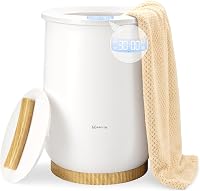
Towel Warmer Auto Shut-Off and Features Worth Paying For
A towel warmer auto shut off feature ends a heating cycle after a set time. Choose cycle lengths that fit your routine, then add a delay start, child lock or display if you'll use it.
On this page (8 sections)
- What does towel warmer auto shut-off do?
- Which towel warmer timer features are worth paying for?
- How do these towel warmer auto shut-off models compare?
- Is a delay start worth paying extra for?
- Do a child lock, display or progress bar add value?
- How should you set up and use a towel warmer with auto shut-off?
- What mistakes should you avoid?
- Which towel warmer auto shut-off features should you choose?
A towel warmer auto shut off feature ends a heating cycle after a set time, so you don't need to remember to turn the unit off. It's useful if you want a warm towel after a shower and prefer a built-in limit on how long the cycle runs.
Start by matching the timer to your routine and the capacity to the items you warm. A delay start, child lock or display is worth paying for when it solves a specific need in your home.
This guide covers countertop bucket warmers. For a wider comparison of styles and uses, see towel warmers for the bathroom.
What does towel warmer auto shut-off do?
Auto shut-off turns the warmer off when its heating cycle ends. It limits how long that cycle runs, but it doesn't tell you how warm a towel will be or whether the unit is suitable for unattended or overnight use.
Check which cycle lengths a warmer offers before buying. A shorter setting may fit a quick shower, while a longer one may suit a bath or a heavier item, if the instructions allow it.
A timer is one part of safe use. Set the warmer on a stable surface, keep its controls and cord in suitable condition, and follow the instructions for loading and operation.
Which towel warmer timer features are worth paying for?
A timer is worth paying for when its settings match your routine. A delay timer adds value if you want heating to begin later, while auto shut-off controls how long a cycle runs.
| Feature | What it does | Consider it if |
|---|---|---|
| Heating timer | Sets how long a cycle runs | You want the warmer to turn off without a manual reminder |
| Delay timer | Schedules a future start | Your shower or bath time is predictable |
| Progress indicator | Shows heating progress or a suggested fabric time | You want a visual cue while you wait |
| Temperature display | Shows temperature during heating | You want more information than a countdown |
| Child lock | Helps prevent accidental operation | Children or pets may reach the controls |
A delay start asks you to plan ahead. If your schedule changes often, a direct-start timer may be easier to use than a feature you rarely set.
A progress bar or temperature display can make a cycle easier to follow, but each does a different job. Choose the cue you find useful, and check the cycle options separately.
How do these towel warmer auto shut-off models compare?
Choose the controls you'll use regularly, not the model with the longest feature list. These four bucket warmers offer different combinations of timers, displays, capacity and household controls.
Keenray CL1 Plus: is its timer right for you?
The Keenray CL1 Plus suits buyers who want several cycle lengths and a scheduled start. Its timer offers 30, 45, 60 or 90 minutes, and its delay timer can be set up to 24 hours.
A touch screen displays heating temperature, and you can select low, medium or high heat. The 20 L warmer has a fragrance disc and is sized for up to two 40 x 70 in towels.
Choose it if you want to control both the start time and cycle length, or you need a longer cycle option. Skip it if you want simple, direct operation and don't expect to use its display, heat levels or delay timer.
Keenray CL2: who benefits from its child lock?
The Keenray CL2 suits households that want a child lock and a visual progress cue. Its bar suggests 20 minutes for light fabrics such as towels and 30 minutes for heavier items such as bathrobes or pajamas.
The 18 L warmer is sized for up to two 40 x 70 in towels and has a fragrance disc holder. Its controls are a strong fit when access to the warmer matters as much as seeing cycle progress.
Choose it if a child lock addresses a real need in your household. Skip it if you don't need that control or prefer to see a remaining-time countdown and temperature on a screen.
Keenray CL45: is a visible countdown useful?
The Keenray CL45 suits buyers who want to see both the temperature and remaining cycle time. Its LCD displays those details, and its cycle options are 15, 30, 45 or 60 minutes.
It also has a delay timer of up to 24 hours and a fragrance disc holder. The warmer is designed to fit up to three 40 x 70 in towels, so it suits households with larger loads.
Choose it if you expect to warm several towels and want a visible countdown. Skip it if your usual load is smaller and the extra capacity and screen won't affect your decision.
Live Fine: who should choose its simpler controls?
The Live Fine LED Bucket Towel Warmer suits buyers who want a straightforward timed cycle without a scheduled start. You can select 15, 30, 45 or 60 minutes, and its LED display and safety indicator lights provide visible cues while it runs.
The warmer accommodates up to two oversized 40 x 70 in towels. Its removable lid has a carry handle, and dry items should be folded loosely for better results.
Choose it if a direct-start timer covers your needs. Skip it if you want to schedule a future start or regularly warm more than two oversized towels.
Is a delay start worth paying extra for?
A delay start helps when you can predict when you'll want a warm towel. You can set the warmer ahead of time, then let the cycle timer end the heating session.
A regular morning routine is a good use for scheduled heating. A model with both controls lets you plan when heating begins and how long the warmer runs.
Skip a delay timer if you prefer to press start yourself or your routine changes too often. To plan the timing around your shower, see how long a towel warmer takes to heat up.
Do a child lock, display or progress bar add value?
These features are useful when they make a real task easier or address a household need. A child lock can help prevent accidental operation when children or pets can reach the controls, but it doesn't replace supervision or the warmer's instructions.
A display can show time or temperature, while a progress bar may indicate a suggested heating duration. Decide which information you want while a cycle runs, and avoid paying for cues you'll ignore.
If the controls are out of reach and you only need the warmer to stop after a set time, prioritize the timer and capacity. For more timed options, compare the best towel warmers with a timer.
How should you set up and use a towel warmer with auto shut-off?
Set up the warmer where you can use its controls and place items inside as the instructions direct. Before the first cycle, check how to set the timer, whether a delay is active, and what the indicator lights or display mean.
Use these steps as a starting point, then follow the instructions for your model:
- Place the warmer on a stable, level surface with room to open the lid.
- Keep the cord clear of walkways and position the warmer where the plug can be reached.
- Load the recommended number and type of items without forcing them into the compartment.
- Select a cycle that fits your routine and the fabric guidance for the model.
- If you use a delay timer, confirm the start time before leaving the warmer.
- Remove items when the cycle ends and let the unit cool as its instructions direct.
A bucket warmer is intended to warm fabric, not dry a soaked load. Check the manufacturer's directions before using damp items, and see whether you can put wet towels in a towel warmer.
For fragrance, follow the warmer's instructions for its holder. The Keenray CL2 calls for its official fragrance discs, placed in the holder away from towels; it warns against putting essential oils or other liquids in that holder.
What mistakes should you avoid?
The most common buying mistake is choosing a feature because it sounds useful without checking how you'll use it. Match the timer and capacity to your routine before paying for extra controls.
Avoid these common errors:
- Confusing delay start with auto shut-off. One schedules when heating begins; the other ends a cycle.
- Assuming every model has the same timer settings. Compare cycle lengths and check how the controls work.
- Ignoring capacity. Count the towels or other items you expect to warm at once.
- Overloading the bucket. Use only the load and fabric types allowed by the instructions.
- Assuming a timer makes overnight use suitable. A timed cycle doesn't replace the manufacturer's guidance.
- Using fragrance products in the wrong way. Use only what the model's instructions allow, and keep it away from fabric if directed.
- Buying a display you won't use. A visible temperature or progress bar matters only if you'll check it.
If overnight use is your main concern, read can you leave a towel warmer on overnight?. Choose based on the specific instructions and controls for the model you plan to use.
Which towel warmer auto shut-off features should you choose?
Choose a towel warmer auto shut off by starting with the timer and capacity, then adding only the controls your household needs. A longer feature list does not make a better fit if you won't use those features.
- Choose a simple cycle timer if you only need the warmer to stop after a set period.
- Choose a delay timer if you have a regular schedule and want to plan a future start.
- Choose a child lock if you need to limit access to the controls.
- Choose a display or progress bar if seeing time, temperature or progress helps you follow a cycle.
- Choose more capacity if you warm several towels or robes together.
For scheduled starts and several cycle lengths, the Keenray CL1 Plus is the strongest fit here. For a child lock, consider the Keenray CL2; for a visible temperature and countdown, choose the Keenray CL45; for a basic timed cycle, consider Live Fine.
Compare these models with the broader range of best electric towel warmers before deciding. That roundup helps if you want to weigh bucket warmers against other electric options.
Frequently asked questions
What does auto shut-off mean on a towel warmer?
Auto shut-off means the warmer turns off after a set heating cycle, so you don't have to switch it off manually at the end. Check which timer lengths the model offers and whether it starts when you press the control or can be scheduled for later.
Is a delay timer the same as auto shut-off?
No. A delay timer schedules when heating begins.
Auto shut-off ends a heating cycle after its selected duration.
A warmer with both lets you plan a start time and limit how long the cycle runs.
Does auto shut-off mean a towel warmer is safe to leave on overnight?
A timer can end a heating cycle, but it doesn't mean a particular warmer is intended for overnight use. Follow the manufacturer's instructions for the model, use its controls as directed and read our guide to leaving a towel warmer on overnight.
Which towel warmer features matter most?
Start with a timer that fits your routine and a capacity that matches the items you warm. A delay start helps with a predictable schedule; a child lock can help prevent accidental operation, and a display can make time or temperature easier to check.
Can I put wet towels in a towel warmer with auto shut-off?
Auto shut-off controls how long the warmer runs; it doesn't determine whether wet towels are suitable. Check the instructions for your model and use towels as directed.
Our guide to putting wet towels in a towel warmer explains what to consider.