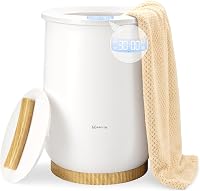
Can You Leave a Towel Warmer On Overnight?
Usually, use a towel warmer overnight only if its manual allows it and you follow its timer or auto shut-off instructions. Many bucket models are designed for timed warming, not continuous operation.
On this page (9 sections)
- Can you leave a towel warmer on overnight?
- What should you check before using one overnight?
- Does auto shut-off make overnight use safe?
- How can you schedule a warm towel without running a warmer all night?
- How long does a towel warmer need to run?
- What if your warmer has no timer?
- Can you leave a towel in the warmer until morning?
- When should you turn a towel warmer off?
- What's the safest overnight routine?
Usually, use a towel warmer overnight only if its manual permits it and you follow the timer or auto shut-off instructions. Many bucket warmers run for a selected period, while a delay timer schedules when heating begins.
Don't assume a warmer can stay on continuously just because it has a timer. Check the manual for operating time, loading instructions, placement, and whether the unit should be unplugged after use.
Can you leave a towel warmer on overnight?
Use a towel warmer overnight only if its instructions allow it. If the manual doesn't clearly permit unattended overnight use, use a timed cycle that ends before bed.
A delay timer and a heating timer do different jobs. A delay timer schedules a later start, while a heating timer controls how long the warmer runs once the cycle begins.
For example, the Keenray CL1 Plus offers heating durations of 30, 45, 60, or 90 minutes and a delay timer of up to 24 hours. Those settings let you schedule a warming period, but they don't mean the unit runs continuously all night.
Check the controls before setting a cycle, and keep the manual where you can refer to it. For a closer look at timer and shut-off features, read our guide to towel warmer auto shut-off features.
What should you check before using one overnight?
Read the manual for run time, auto shut-off, placement, and towel-loading directions. Follow the instructions for your exact model, since bucket warmers and heated racks can have different controls.
Before starting a cycle:
- Confirm the selected heating duration and how the unit shuts off.
- Check whether a delay setting starts later or controls run time.
- Place the warmer on a stable, level surface if the manual calls for one.
- Keep the cord and plug dry, and follow the manual's outlet guidance.
- Load only the items and amount the warmer permits.
- Keep the unit away from objects that could block ventilation or touch hot surfaces.
Don't cover the warmer or use it with a damaged cord or plug. If the unit has a hot-surface indicator or a cool-down instruction, follow it.
If you're choosing a wall-mounted rack, check whether its electrical connection needs special installation. Our guide to whether a heated towel rack needs hardwiring explains what to check before choosing one.
Does auto shut-off make overnight use safe?
Auto shut-off limits how long a warmer runs, but it doesn't replace the manual's instructions. Check how the feature works and whether the unit is meant to operate while you're asleep.
The SereneLife Digital Display Towel Warmer has 20-, 40-, 60-, and 90-minute settings, with automatic shut-off after the selected time. This gives you a set warming period.
A timer doesn't tell you whether the warmer can be left plugged in, loaded, or unattended in every situation. Use the control as directed, and don't restart a cycle repeatedly overnight unless the manual says that's allowed.
To compare timed options and how they work, see towel warmer auto shut-off features.
How can you schedule a warm towel without running a warmer all night?
Set a heating period to finish near the time you expect to use the towel. If your model has a delay timer, use it to start the cycle later, following the manual.
The Keenray CL1 Plus offers a delay timer of up to 24 hours and heating periods up to 90 minutes. These controls can help schedule warmth for a morning shower without leaving the warmer to run continuously overnight.
The Asuka Wood Handle Towel Warmer has 1-, 3-, 8-, and 12-hour delay settings. Asuka suggests the 12-hour mode for nighttime routines, but follow the unit's instructions for setting and using that mode.
A delay setting doesn't necessarily describe how long the warmer heats. Confirm both the start time and heating duration before you go to bed.
How long does a towel warmer need to run?
Use a cycle within the unit's settings that gives you the warmth you want. Run time varies by model, towel placement, and how warm you prefer the towel.
Bucket warmers often offer preset cycles, while heated racks may have different controls. Check the manual instead of assuming that a longer cycle will make the towel safer or better.
For expectations about warming time, see how long a towel warmer takes to heat up. If you're comparing warmth, our guide to how hot a towel warmer gets explains why heat can vary by design and use.
What if your warmer has no timer?
Don't leave a timer-free warmer running overnight unless its manual specifically permits it. Turn it off after use, or choose a model with controls that fit your routine.
A clear shut-off setting makes it easier to plan a warming session. The SereneLife Digital Display Towel Warmer has four heating-time options and shuts off after the selected period.
Before buying, compare the timer type with when you'll use the warmer. A delay timer helps with scheduling, while automatic shut-off controls how long it runs.
Can you leave a towel in the warmer until morning?
Follow the manual's loading and removal guidance, and don't treat the warmer as overnight towel storage. Some models are built for timed warming cycles, and a towel left inside after shut-off may not stay warm.
If the towel is damp, check whether your model allows wet items and remember that warming isn't the same as drying. See whether you can put wet towels in a towel warmer before loading one.
When should you turn a towel warmer off?
Turn it off when the cycle ends, or unplug it if the manual directs you to do so. Stop using it if you notice damage, an unusual smell, or a control that doesn't work as expected.
Keep the warmer and its electrical connection away from water, and follow the manufacturer's cleaning and maintenance steps. For heated racks, use the installation and electrical guidance for the specific model.
What's the safest overnight routine?
Follow the manual and schedule a limited cycle only if the model allows overnight use. A delay timer can start warming shortly before use, while auto shut-off can end a set heating period.
If you can't confirm that overnight use is allowed, switch the warmer off before bed. Choose a model with clear timing controls if you want a warm towel ready in the morning, and read how long a towel warmer takes to heat up to plan the cycle.
Frequently asked questions
Can you leave a towel warmer on overnight?
Only if the specific model's manual allows overnight use and you follow its timer and safety instructions. Many bucket warmers use a selected heating period.
Some have delay timers that start later, but a delay timer doesn't mean you can run the warmer unattended all night.
Do towel warmers turn off automatically?
Some towel warmers have automatic shut-off, but the timing and controls differ by model. Check the manual for how long the unit runs, whether shut-off is automatic, and whether a delay setting starts the heating cycle later.
A timer feature doesn't mean continuous operation is safe.
Can I put a wet towel in a towel warmer overnight?
Follow the warmer's manual for towel condition and loading. A towel warmer is for warming towels, and a wet towel may take longer to warm or may not dry fully.
For loading guidance, see whether you can put wet towels in a towel warmer.
Is a towel warmer safe to leave plugged in?
Follow your model's power connection and placement instructions, and unplug it when the manual directs. Keep the cord and plug dry, use a suitable outlet, and stop using the warmer if the cord, plug, or housing is damaged.
A plug-in connection alone doesn't mean it should run overnight.