How Hot Does a Towel Warmer Get?
A towel warmer's heat depends on its design: the Aquatrend rack offers settings from 100°F to 140°F, while Live Fine and SAMEAT bucket warmers use timers without a published temperature range. Follow your model's instructions and safety warnings.
On this page (7 sections)
- How hot does a towel warmer get by design?
- Does a warmer's setting equal the towel temperature?
- Which controls help you manage the heat?
- How can you use a towel warmer safely?
- Do bucket warmers and heated racks warm towels the same way?
- How do you choose a comfortable heat level?
- Which towel warmer fits your temperature preference?
A towel warmer's heat depends on its design: the Aquatrend rack offers settings from 100°F to 140°F, while Live Fine and SAMEAT bucket warmers use timers without a published temperature range. Follow your model's controls and safety instructions.
“Temperature” can refer to the warmer's surface, the air inside a bucket, or the towel itself. Those readings may differ, so a control setting doesn't guarantee that every fold reaches the same temperature.
How hot does a towel warmer get by design?
A rack with adjustable temperature settings gives you a clearer heat range than a bucket warmer with timer controls. The Aquatrend 10-Bar Flat Heated Towel Rack offers 5 settings from 100°F to 140°F.
That range describes the rack's selectable settings, not a guaranteed towel temperature. Fabric position, folds, and time on the warmer can affect how evenly a towel warms.
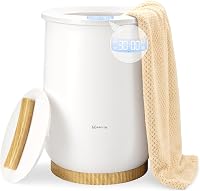
Bucket warmers let you choose how long they run. The Live Fine model has 15-, 30-, 45-, and 60-minute timer options, and the SAMEAT model offers 30 minutes, 1 hour, 2 hours, or 4 hours.
A longer timer isn't the same as a higher temperature setting. If you want to control heat directly, look for a model with published temperature settings.
Does a warmer's setting equal the towel temperature?
No, a warmer's setting doesn't necessarily tell you the exact temperature of the towel. A rack setting describes the heat control, while towel warmth also depends on how the fabric sits against the bars and how long it stays there.
A thick or folded towel may warm differently from a thin towel spread across a rack. In a bucket, loosely folded fabric can leave fewer dense layers than tightly packed fabric.
Don't compare a rack's temperature setting with a bucket's timer as if they measure the same thing. Our guide to how long a towel warmer takes to heat up explains why warming time also depends on design and setup.
Which controls help you manage the heat?
Choose controls that match how you want to use the warmer: temperature settings for heat adjustment, or a timer for run time. A timer can limit how long the unit runs, but it doesn't show the towel's temperature.
When is a temperature control useful?
A temperature control is useful if you want to choose among set heat levels. Aquatrend's rack offers 5 settings, from 100°F to 140°F, along with timer options.
The rack is wall-mounted, so check your wall space and installation needs before choosing it. The package doesn't include hardwired accessories, so review the setup instructions if you need hardwiring.
When is a timer enough?
A timer is useful if you mainly want the warmer to stop after a set period. Live Fine offers cycles from 15 to 60 minutes, while SAMEAT offers options from 30 minutes to 4 hours.
The Live Fine bucket is described as fitting up to 2 oversized 40 x 70 in towels when loosely folded. For capacity and placement guidance, see what size towel warmer you need.
SAMEAT warns against touching the bucket's interior while its hot-surface indicator is on. It also says not to use this model to dry wet or damp items.
How can you use a towel warmer safely?
Follow the instructions for your exact model, especially its surface warnings and fabric limits. A warmer's set temperature or timer doesn't replace the safety directions.
SAMEAT warns that its interior isn't safe to touch while the hot-surface indicator is on. Keep hands away from that surface when the light is active, and let fabric cool before handling it if needed.
SAMEAT says cotton materials can be heated, but advises against chemical-fiber clothing or towels and materials that aren't heat-resistant. The brand also says not to put damp items in the bucket to dry them.
Don't assume every warmer has the same controls, fabric guidance, or safety features. If you're considering longer run times, read whether you can leave a towel warmer on overnight and follow the specific unit's instructions.
Do bucket warmers and heated racks warm towels the same way?
No, they warm fabric differently, so their controls and heat descriptions aren't directly interchangeable. A bucket surrounds loosely folded fabric, while a rack warms towels placed over its bars.
A bucket can suit you if you want to warm a towel inside a compartment. A rack can suit you if you prefer towels hanging in the bathroom and want selectable temperature settings.
The Aquatrend rack has 10 flat bars and temperature choices up to 140°F. The Live Fine and SAMEAT buckets offer timers, but their product information doesn't provide a temperature range.
For a broader look at the two formats, see towel warmers for the bathroom. Our guide to how towel warmers work explains the basic differences in more detail.
How do you choose a comfortable heat level?
Choose the lowest setting or shortest cycle that gives you the warmth you want, then adjust only within the model's controls. This lets you learn how your towel warms without assuming the control number equals its final temperature.
For a rack with temperature settings, start low and see how the towel feels after the unit has been running. For a bucket with timer controls, follow the unit's use guidance and avoid extending the cycle beyond the options provided.
Keep fabric arranged as the manufacturer directs. Loose folds can help avoid dense layers, and a towel draped across rack bars can expose more fabric to the heated surface.
Which towel warmer fits your temperature preference?
If you want a published temperature range, choose a rack such as the Aquatrend, which offers settings from 100°F to 140°F. If you mainly want to choose the run time, consider a bucket such as Live Fine or SAMEAT, which offers timer options.
Pick a towel warmer based on the control you need and the space where it will go. For more on the warming experience and what to expect, read do towel warmers actually work?.
Frequently asked questions
How hot does a towel warmer get?
It depends on the design. The Aquatrend rack offers settings from 100°F to 140°F, while Live Fine and SAMEAT bucket warmers specify timers without publishing a temperature range.
Check your model's controls and instructions, and follow its surface warnings.
Can a towel warmer get hot enough to burn you?
A heated surface may be uncomfortable or unsafe to touch, so follow the model's warnings and keep hands away from hot surfaces. SAMEAT warns against touching the bucket interior while its hot-surface indicator is on.
Let towels cool if they feel too hot to handle.
Do bucket towel warmers have a temperature setting?
These two bucket warmers control run time rather than offering a selectable temperature range. Live Fine has 15-, 30-, 45-, and 60-minute cycles, while SAMEAT has 30-minute, 1-hour, 2-hour, and 4-hour settings.
Those timer options don't tell you the exact fabric temperature.
Is a towel warmer supposed to dry wet towels?
Don't assume a towel warmer can dry a wet towel. SAMEAT says not to use its bucket warmer to dry damp items.
Check your model's instructions before placing anything damp inside.