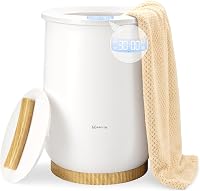
How to Use a Towel Warmer
To use a towel warmer, load dry towels loosely, close the lid, and set a timer. Let the unit finish its cycle, then lift out warm towels with dry hands and switch it off.
On this page (9 sections)
- What do you need before you switch a towel warmer on?
- How do you load towels so they warm evenly?
- How do you set the timer and start the cycle?
- How do you take warm towels out safely?
- Which towel warmer makes everyday use easiest?
- How do you keep a towel warmer clean and running well?
- Which safety habits matter most day to day?
- How does a towel warmer fit into a normal daily routine?
- How do you use a towel warmer well?
To use a towel warmer, load dry towels loosely, close the lid, and set a timer. Let the cycle finish, then open the lid and take out warm towels with dry hands.
The routine is short, and the main habits are simple: keep towels dry going in, leave space for heat to move, and switch the unit off when you're done. Here's how you use a towel warmer safely in a normal home, day after day.
What do you need before you switch a towel warmer on?
You need dry towels, a flat stable surface, and an outlet near the unit. A towel warmer heats fabric; it doesn't dry it, so wet towels should go on a rack first.
The Keenray CL2 lists towels, socks, bathrobes, pajamas, and blankets among the items it warms. Check the care guidance for any fabric you're unsure about.
Keep the unit away from water splashes and off the edge of a wet floor. If you plan to use it in a bathroom, read our guide to choosing a towel warmer for home use before you pick a spot.
Don't load it while it's running. Fill it first, close the lid, then start the cycle.
A clear, dry spot near the shower also means you don't carry warm towels across a wet floor.
How do you load towels so they warm evenly?
Fold towels loosely and leave gaps between them so warm air can move around each one. Stacking them tight creates cold spots in the middle of the pile.
The Live Fine bucket fits up to 2 oversized 40 by 70 in towels. Load them dry and loosely folded, as the brand advises, for the best results.
The Keenray CL2 holds two 40 by 70 in bath towels in its 18L bucket. The VIPBATH 35L takes 3 large towels or 2 robes.
Don't cram the bucket past its stated capacity. If the lid won't close without pressure, you've overloaded it.
Take one item out rather than forcing the lid down.
How do you set the timer and start the cycle?
Set the timer for the fabric type, then leave the lid closed until the cycle ends. Thin hand towels need less time than thick bathrobes.
The Live Fine bucket offers 15, 30, 45, or 60 minute cycles, chosen with a single button on its LCD display. It holds the set temperature for the whole cycle.
The Keenray CL2 uses a single button plus a progress light bar. The bar shows "light fabric" at about 20 minutes for towels and socks, and "heavy fabric" at about 30 minutes for bathrobes and pajamas.
The VIPBATH has a front control panel and a clear window so you can check towels without lifting the lid. Checking without opening keeps the heat inside.
Start with the shorter setting for light items. You can always add time; overheating towels for no reason just wears the fabric.
If the warmer came with a fragrance disc holder, add a disc as you start the cycle so the scent settles into the fabric while it heats.
How do you take warm towels out safely?
Open the lid with dry hands and lift towels straight up so they don't touch the heating element. Warm fabric feels good, but the inside of the bucket can be hot.
Let towels rest a moment before wrapping them around your neck or shoulders. The Keenray CL2 reaches high temperature in 6 minutes, so its interior gets warm.
Switch the unit off after you close the lid again. Auto shut-off covers a forgotten cycle, but turning it off yourself is the cleaner habit.
On a bucket with a removable lid and carry handle, like the Live Fine, the lid comes up easily, so there's no need to reach deep into the warm interior.
Don't lean on or reach deep into a running unit. If you need to add a towel mid-cycle, stop the warmer first.
Which towel warmer makes everyday use easiest?
The Live Fine LED Bucket Towel Warmer is the simplest for most people, because its timer does the thinking for you. Our score weighs specs, features, and how well each unit fits a daily routine.
The Live Fine bucket has a removable lid with a carry handle and safety indicator lights. Its stabilizing feet keep it firm on tile and ceramic floors.
The 15, 30, 45, and 60 minute settings suit both quick warm-ups and longer robe cycles.
The Keenray CL2 suits homes with children or pets. Its child lock on the top cover stops small hands from opening the bucket, and the progress bar takes the guesswork out of timing.
It also has a fragrance disc holder for aromatherapy tablets; use only Keenray's own discs and keep them off the towel. The leather handle and compact 18 by 11 in footprint help it sit neatly in a small bathroom.
The VIPBATH 35L fits larger families, with room for 3 towels or 2 robes. Its frame folds flat in seconds for storage, and the anti-tip auto power-off adds a second layer of safety.
It also arrives gift-ready with 12 scented discs in mint, ocean, and cologne, so a family can change the scent to suit the room.
What should you know before choosing your first warmer?
Match the capacity to your household first. A couple is fine with a two-towel bucket like the Live Fine or Keenray CL2; a family sharing towels needs the 35L VIPBATH.
Then look at controls and safety for your home. A child lock matters more than a fragrance holder in a house with small children, and a folding frame matters more in a small bathroom than a bigger bucket.
How do you keep a towel warmer clean and running well?
Wipe the inside after each use and let it air dry before closing the lid for the day. A warm, closed bucket with damp residue is the last place you want a smell to start.
Unplug the unit before wiping it down. Use a soft cloth and a mild cleaner on the outside, and follow the maker's care instructions for the interior.
Check the cord and plug for wear now and then, and keep them dry. Empty the bucket if you won't use it for a while.
If you use fragrance discs, remove the disc after use or when the scent fades, and never put essential oils or liquids in the holder, because they can damage the warmer.
Replace frayed cords rather than taping them. A unit that trips a breaker or feels unusually hot on the outside needs to be switched off and checked.
Which safety habits matter most day to day?
Dry towels only, the timer on, the unit off when you're done, and a lock or tip-over cut-off for busy homes. These four habits prevent most everyday problems.
Never leave a towel warmer running while you're out of the house. Our guide to whether you can leave a towel warmer on overnight explains why the timer and shut-off matter more than convenience.
Keep the cord out of reach of children and pets. The Keenray CL2's child lock covers the top cover; the VIPBATH adds anti-tip shut-off and ETL certification for family homes.
Don't use the warmer to dry wet towels. Our post on can you put wet towels in a towel warmer covers why dry loading is the rule.
A tip-over cut-off like the VIPBATH's also covers the case where someone bumps the unit on a crowded bathroom floor.
How does a towel warmer fit into a normal daily routine?
Start the warmer before you shower and take towels out when you're done. A 15 to 30 minute head start means warm towels are waiting when you step out.
Set the timer as you head for the shower. For a bath, start it before you fill the tub; for a quick morning shower, a 15 minute cycle is enough.
The Keenray CL2's quick heat-up means it is already warming within 1 minute and at high temperature in 6 minutes, so a short head start goes a long way.
Fold towels back into the bucket when the bathroom is done for the day. Run a longer cycle when guests visit, or when bathrobes and pajamas need warming too.
The Keenray progress bar's "heavy fabric" mark at about 30 minutes is a good cue for robes and pajamas.
Check the timer each time. A warm towel feels like a small luxury, and a clear habit keeps it safe.
How do you use a towel warmer well?
Use it with dry towels loaded loose, a timer set for the fabric, and the unit switched off afterward. That routine covers most of the question of how you use a towel warmer in a real home.
Pick the Live Fine bucket for simple timed cycles and two big towels. Choose the Keenray CL2 when a child lock and a progress bar matter.
Go with the VIPBATH 35L if a folding frame and more capacity fit your household better.
If you're still deciding whether one belongs in your bathroom, read what is the point of a towel warmer first. It covers the comfort and routine benefits before you buy.
Frequently asked questions
Should towels be wet before going into a towel warmer?
No. Load towels that are fully dry, because a warmer heats fabric rather than drying it.
Damp towels slow the warm-up and can leave a musty smell, so dry them first and use the warmer only for warming.
How long does a towel warmer take to warm towels?
The Keenray CL2 heats up in 1 minute and reaches high temperature in 6 minutes. The Live Fine bucket offers 15, 30, 45 or 60 minute cycles.
Let thick bathrobes run longer than light hand towels.
Can you leave a towel warmer on all day?
No. Use the timer or auto shut-off and switch the unit off when you're done.
The Keenray CL2 and Live Fine bucket both shut off automatically, and the VIPBATH powers down if tipped over.
Is a towel warmer safe around children?
It's safe when you use the lock and keep the cord out of reach. The Keenray CL2 has a child lock on the top cover, and the VIPBATH has anti-tip auto power-off plus ETL certification.