Do Towel Warmers Dry Towels?
Most towel warmers warm and air towels rather than fully drying soaking wet ones. Bar-style electric warmers can dry damp towels over several hours, but a bucket warmer is not built to hold or dry wet fabric.
On this page (8 sections)
- Do towel warmers dry towels at all?
- Which type of towel warmer dries fabric?
- How long does it take for a towel warmer to dry a towel?
- How should you load a bar warmer so towels dry faster?
- What about bucket warmers and drying?
- Which warmer should you pick for drier towels?
- What habits keep towels dry between showers?
- So, do towel warmers dry towels?
Most towel warmers warm and air towels rather than fully drying soaking wet ones. Bar-style electric warmers can dry damp towels over several hours, but a bucket warmer is not built to hold or dry wet fabric.
So if your question is do towel warmers dry towels, the honest answer is: partly, and it depends on the design.
The labels overlap because warmth and dryness are linked. A warm towel feels dry and fresh, while a cold, damp one feels clammy even when it is only slightly wet.
Getting the most from a warmer is about matching the style to what you actually need.
Do towel warmers dry towels at all?
Yes, but slowly and only partly. A heated rail dries the thin layer of moisture left after a shower, and that is enough to keep a towel fresh between washes.
The drying happens by evaporation, not by airflow. Warm bars raise the towel's temperature so water leaves the fabric faster than it would on a cold hook.
That process takes hours, not minutes, and a towel that is dripping wet will overwhelm it.
Think of the warmer as a finishing tool. The heavy drying happens in the wash and, if you have one, the dryer.
The warmer takes a towel the rest of the way and keeps it ready for the next shower.
It also gives a small boost to a small bathroom, where towels often hang close together and never fully air out. That is one practical reason people buy a towel warmer in the first place.
Which type of towel warmer dries fabric?
The type matters more than the brand. Open bar and rack warmers dry best because air reaches both sides of the towel, while enclosed buckets are for warming dry fabric.
Bar warmers hold towels apart on horizontal rails. Warm air moves through the gaps, so moisture can escape from the whole surface.
Racks with a folding frame work the same way and can sometimes be moved between spots.
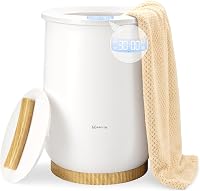
Bucket warmers heat a closed drum. They are excellent at making a dry towel feel like it came from a spa, but the chamber is designed for dry fabric.
Even the Zadro bucket is built to hold warm towels, not wet ones; Zadro's own guidance says the chamber is not meant to hold or dry wet towels.
If your main goal is genuinely dry towels in a humid bathroom, a bar warmer is the better starting point. If you mainly want warm towels after a bath, a bucket is the more satisfying choice.
Our guide to how towel warmers work breaks down the heating methods in more detail.
Where does each design fit in a bathroom?
A bar rail suits the wall beside the shower or over the bath, where a damp towel can go up straight away. It needs a socket within reach of its cord.
A bucket sits on the floor or a low shelf, so it takes up footprint rather than wall space. That makes it a good fit for a large bathroom or a bedroom corner, not a narrow shower room.
How long does it take for a towel warmer to dry a towel?
Plan on a few hours for a damp towel, and much longer for a wet one. There is no fast setting on a standard warmer.
A towel that has been used once and hung out immediately might feel dry within 2 to 4 hours on a warm rail. A towel left in a heap on the floor until evening will take far longer, because the moisture has spread through the whole thickness.
Room conditions change the timing. A steamy bathroom with the door shut slows evaporation, while an open window or extractor fan speeds it up.
A towel folded over itself several times traps water in the middle, so spread it out.
A thick bath sheet holds more water than a hand towel, so it needs more time and more bar spacing. If you dry two towels at once, keep them apart rather than layering them.
How should you load a bar warmer so towels dry faster?
Load it so air can move around each towel. A single layer draped over a bar dries faster than a bundle stuffed through the gaps.
Spread the towel along the full width of the rail and let the two ends hang free. Avoid folding it back on itself, which creates a cool, damp pocket in the middle.
If the bars are close together, use every other one for a thick towel.
Turn the towel once partway through if you can. The side facing the bar gets the most heat, so flipping it helps the other face catch up.
Run the warmer for a set period rather than all day. The Colliford 8-bar unit has a visual timer that runs from 1 hour to 9 hours or stays on, so you can give a towel a few hours of heat and then stop.
That habit keeps energy use sensible and stops towels from getting over-hot.
What settings should you start with?
Start with a couple of hours and check the towel. If the middle still feels cool and heavy, give it more time or spread it thinner across the bars.
A timer makes that easy to repeat, and an overheat cutout on the Colliford protects the heating rod and the fabric if you forget.
What about bucket warmers and drying?
A bucket warmer is for warming, not drying. Put only dry towels in the drum, and let damp ones air out first.
The enclosed design traps moisture if wet fabric goes in. That can leave the towel feeling clammy and can encourage a musty smell inside the bucket.
The Zadro bucket has a 20 liter tub that fits up to two large 40 by 70 inch bath towels or a robe, but that capacity is meant for dry, ready-to-use fabric.
The right routine is simple. Dry the towel on a rail or hook after your shower, then place the fully dry towel in the bucket before the next bath.
It comes out warm and spa-like without any moisture problem.
The Zadro unit also has a timer and auto shut-off, so you can start it shortly before you need the towel. Keep it for adults and supervise children around it, since the chamber gets hot.
The unit weighs 8.5 pounds and stands 21 inches tall by 12 inches wide, so it needs a little floor or shelf room.
Which warmer should you pick for drier towels?
For drying damp towels day to day, the bar warmer does the most work; for warming dry towels, the bucket wins. Pick based on which job you actually need done.
The Colliford 8-bar rail is the drying choice. It reaches 122 to 131°F within about 20 minutes and runs on a 60 in power cord, so it suits a bathroom wall near a socket.
Its IPX5 water resistance matters in a steamy room. It can be hard-wired or plugged in, and its 201 stainless steel with a black coating is built to resist rust.
If you want flexibility, the Homeleader 2-in-1 works as a wall-mounted rail or a free-standing rack. It warms to 131 to 141°F within 30 minutes and has an in-line on and off switch.
The maker calls it a drying rack, and its open design supports that job. It weighs 6.8 pounds, so the free-standing version is easy to move between rooms.
Check the wall length before you commit. Our guide to what size towel warmer you need helps you match bar count and width to your bathroom, and the best electric towel warmers roundup compares the leading rails.
What habits keep towels dry between showers?
Good habits do more for dryness than any setting. Hang the towel spread out straight after use, and give the room some airflow.
Open the door or run the fan for a few minutes after a shower. Wipe down wet walls and floor so the room's humidity drops faster.
A towel on a cold, closed-in hook stays damp for hours.
Wash towels on a regular schedule, even if they feel dry. Soap residue and body oils build up in the fibres and hold moisture, which is what makes a towel smell after a few days.
A warm rail cannot fix a towel that needs a wash.
Keep the warmer itself clean too. Wipe the bars or the inside of the bucket as the maker advises, and keep the cord and switch dry.
When a unit is not in use, unplug it and store the cord out of the way.
So, do towel warmers dry towels?
They dry damp towels slowly and warm dry ones beautifully, so the answer depends on the style you choose. A bar or rack warmer is the right tool if drying is your goal, and a bucket is the right tool if you want warm, dry towels waiting before a bath.
Set your expectations around hours, not minutes, and load the warmer so air can reach the fabric. That single habit makes the biggest difference to how dry a towel feels when you reach for it.
Frequently asked questions
Can a towel warmer replace a tumble dryer?
No. A towel warmer heats one or two towels gently and slowly, while a dryer uses much more heat and airflow to dry a full load.
Keep the dryer for laundry day and use the warmer to keep everyday towels dry and toasty.
Is it safe to leave a plug-in towel warmer on all day?
Follow the maker's settings. The Colliford has a visual timer from 1 hour to 9 hours or a constant-on setting, while the Homeleader uses a simple in-line on and off switch.
Unplug any unit you are not using, and keep cords away from water.
Will a towel warmer stop towels from smelling musty?
It helps by removing leftover damp after a shower, which is what causes the musty smell. Hang the towel spread out rather than bunched up, and wash towels on a regular schedule so residue does not build up in the fabric.