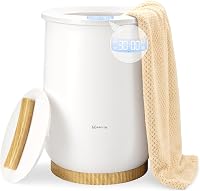
Are There Battery-Powered Towel Warmers?
No, there are almost no true battery-powered towel warmers for home use. Cordless options are heated towel rails that warm towels slowly, while plug-in warmers and racks give reliable, steady warmth from a wall outlet.
On this page (9 sections)
- Are there battery powered towel warmers on the market?
- Why are corded towel warmers the usual choice?
- How does a cordless towel warmer actually work?
- Do heated towel rails need a battery?
- What should you buy instead of a battery towel warmer?
- Which plug-in warmers suit a small bathroom?
- How do you choose a towel warmer for your bathroom?
- Do towel warmers work well enough to skip a battery model?
- So, are there battery powered towel warmers worth buying?
No, there are almost no true battery-powered towel warmers for home use. The practical options are plug-in bucket warmers and heated towel rails that use a wall outlet, so you won't find a cordless unit that matches their steady warmth.
People ask whether battery powered towel warmers exist because they want warm towels without running a cord across the bathroom. The short answer is that the technology is rare and slow, so it isn't worth chasing.
Corded warmers do the job better and cost less.
Are there battery powered towel warmers on the market?
Cordless towel warmers exist but are rare and slow. Most products sold as "towel warmers" either plug into a wall outlet or use a rechargeable battery that holds only a small charge.
A true battery warmer is not a mainstream category, so you won't find one on the shelf at a typical home store.
The reason is simple. Warming a thick cotton towel takes steady heat for 10 to 20 minutes.
A small battery can supply that heat for one towel, then needs a recharge. That is why makers build bucket warmers and rails with cords instead.
The plug stays in, the heat stays on, and the towel is warm when you reach for it.
If a product is described as "battery powered," read the details before buying. Some are heated eye masks or small hand-towel warmers, not full-size towel units.
Others are drying racks with no heater at all. The word "heated" on a box does not always mean the unit holds warmth for a full bath towel.
See what is the point of a towel warmer to decide if warm towels are worth it for your routine.
Why are corded towel warmers the usual choice?
Cords let a warmer deliver steady heat without draining a battery. A plug-in bucket or rail can hold a set temperature for as long as you leave it on.
That steady warmth is what makes a towel feel cozy rather than merely dry.
A battery warmer has to trade power for portability. It warms slowly, loses heat as the charge falls, and needs charging between uses.
For a bathroom, that means more hassle than a cord. You would charge it after each use, wait for it to warm up again, and hope the charge lasts through a second shower.
Plug-in warmers also fit the room. Most bathrooms have an outlet near the vanity, so a short cord reaches a bucket on the counter.
A heated rail mounts on the wall and plugs in behind the towels. Both are simple to use and don't need a recharge cycle.
The cord stays put, so the warmer is ready whenever someone steps out of the shower.
How does a cordless towel warmer actually work?
A cordless model runs on a rechargeable battery or an internal heat pack. The battery powers a small heating element inside the unit.
You charge it, switch it on, and wait while the element warms the towel.
Heat output is low. That is the core trade-off: the unit warms a single towel slowly and cools as the charge drops.
A bucket warmer with a cord heats a stack of towels faster and keeps them warm for as long as it stays plugged in.
Some cordless products are really drying racks with a small fan. They move air over the towel but add little heat.
A rack like that dries a towel but won't make it feel warm on a cold morning. A heat pack model works the same way: it holds warmth for a short while, then fades.
Do heated towel rails need a battery?
No, heated towel rails use a wall outlet. A rail with a heating element plugs in and warms the bars that hold your towels.
It runs on household power, so there is no battery to charge.
A rail warms towels more slowly than a bucket because the heat reaches the towel through the bars. Leave towels on the rail for 20 to 30 minutes and they feel warm.
The rail stays warm as long as it is plugged in. That makes it the closest thing to a battery warmer in spirit, because you switch it on and forget it, but the power comes from the wall.
Many buyers choose a rail because it saves floor and counter space. It mounts on the wall and holds towels flat, so the bathroom stays tidy.
For a family with several towels, a rail holds more than a single bucket. It also keeps towels off the floor and away from the tub edge.
What should you buy instead of a battery towel warmer?
A plug-in bucket warmer or a heated towel rail is the practical buy. Both warm towels reliably and cost less than a cordless unit.
Pick the one that fits your bathroom layout and how many towels you warm at once.
A bucket warmer suits one or two people who want warm towels fast. It heats a stack in about 10 to 20 minutes and sits on the counter.
A rail suits a family or a bathroom with wall space, because it holds several towels and keeps them off the floor.
If you don't have an outlet near the towels, an extension cord rated for the warmer's wattage can reach it. Keep the cord away from the tub and shower splash zone.
Never run a cord across a wet floor. A rail mounted high on the wall often solves the outlet problem without any cord on the floor.
Which plug-in warmers suit a small bathroom?
A compact bucket warmer fits a small bathroom best. It sits on the vanity or a shelf and warms one or two towels without wall space.
A wall rail is the next option when counter space is tight.
The Zadro bucket warms towels with a lid that holds in heat. It suits a couple who want warm towels after a shower and have a free outlet near the sink.
The Homeleader bucket is a second bucket option for a family that warms a few towels at a time. Its bucket shape holds more than one towel, so it suits a busy morning when several people shower in turn.
If you have more wall space than counter space, choose a rail. The LuxeHome rail warms towels on the bars and leaves the counter clear.
A plain wall rack without heat suits someone who only needs towels to dry, not warm. That rack dries towels by air and saves the outlet for other things.
What if the bucket is too big for the room?
A large bucket takes counter space and needs a clear spot near an outlet. If the vanity is small, mount a rail instead and keep the counter free.
A rail holds towels flat against the wall, so it fits a narrow bathroom where a bucket would crowd the sink. The trade-off is slower warmth, but the floor and counter stay clear.
How do you choose a towel warmer for your bathroom?
Start with the outlet and the space, then pick the warmer type. A bucket needs a counter spot and a nearby outlet.
A rail needs wall space and a cord that reaches an outlet.
Check three things before you buy. First, measure the towel size you use and match it to the bucket or rail.
Second, confirm the outlet location so the cord reaches without crossing the tub. Third, decide how many towels you warm at once.
For towel sizing, see what size towel warmer do i need. A bucket holds folded towels, while a rail holds them flat, so the fit differs.
A bath towel that fits a rail may be too long to fold into a small bucket.
Safety matters near water. Keep the warmer away from splashes and follow the maker's instructions.
A grounded plug-in model is the common choice for a bathroom. Place it where the cord won't be tugged and where splashes from the shower can't reach it.
Do towel warmers work well enough to skip a battery model?
Yes, plug-in warmers work well and are the better buy. A bucket or rail warms towels in minutes and holds the warmth.
That is more reliable than a small battery unit.
A battery unit gives you one warm towel and then a charging wait, while a plug-in warmer is ready each time you step out.
Warm towels feel better after a shower or bath, and a rail keeps the bathroom tidier. A bucket is simple: load folded towels, close the lid, and switch it on.
A rail takes longer but holds more towels. Either way, the warmth is steady because the power is steady.
If you want to know whether warm towels make a real difference, read do towel warmers work. It covers how warmers heat towels and what to expect.
One more check: towels should be dry or only slightly damp before warming. A bucket with wet towels traps moisture.
Our guide on can you put wet towels in a towel warmer explains why dry towels warm best and how to handle damp ones.
So, are there battery powered towel warmers worth buying?
Almost never. A battery model warms one towel slowly and needs a recharge.
For a bathroom, a plug-in bucket or heated rail gives steadier warmth and simpler use.
That is the answer to whether battery powered towel warmers make sense for most homes.
Pick a bucket warmer if you want warm towels fast and have counter space. Pick a heated rail if you have wall space and warm several towels.
Choose a plain rack if you only need towels to dry. Each option plugs in or needs no power at all, so none of them asks you to manage a charge.
Skip the search for a cordless unit unless you truly can't reach an outlet. In that case, a warm towel from the dryer is the simplest answer.
For most bathrooms, the corded warmer wins.
Frequently asked questions
Can I use a cordless towel warmer in a bathroom without outlets?
Only if the warmer runs on a rechargeable battery or its own internal heat, and even then the warmth is limited. Most bathrooms have an outlet near the vanity, so a plug-in warmer or heated rail is the simpler choice.
How long does a battery towel warmer take to heat?
A battery model takes much longer than a plug-in warmer, often 20 to 40 minutes, and it cools as the charge drops. Plug-in buckets and heated rails reach full warmth in 10 to 20 minutes and hold it.
Are battery towel warmers safe in a bathroom?
Any electrical item near water needs care. Follow the maker's instructions, keep the unit away from splashes and the tub, and never leave a rechargeable warmer plugged in unattended.
A plug-in model with a grounded cord is the more common choice.
Do towel warmers need to be plugged in?
Almost all of them do. Bucket warmers and heated towel rails use a wall outlet for steady heat.
A few cordless models exist, but they trade power for portability and warm towels more slowly.
What is the closest thing to a battery towel warmer?
A heated towel rail with a low-power heating element is the closest practical option. It draws less than a hair dryer and keeps towels warm as long as it stays plugged in.
For total freedom from cords, a plain drying rack and a warm towel from the dryer are the budget answer.